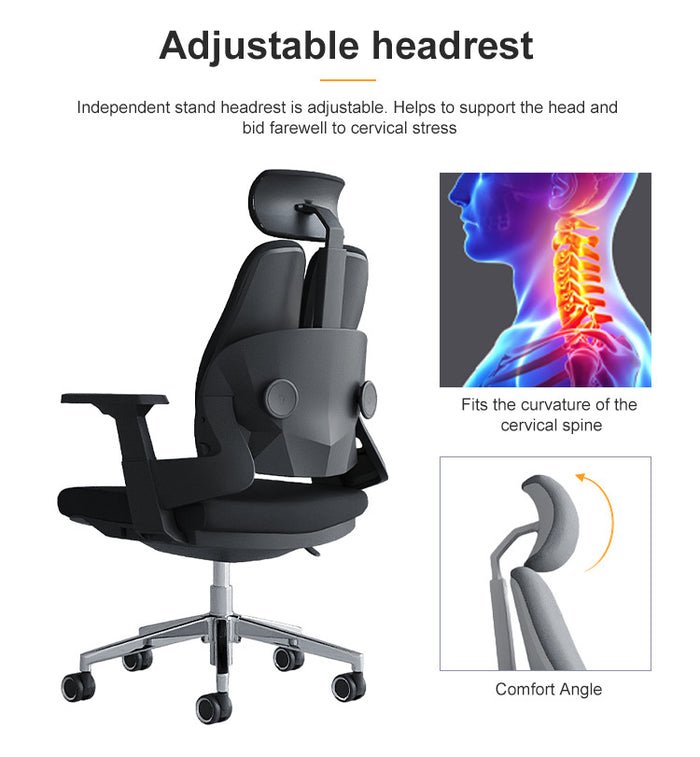
Meta Description: AI-powered posture monitoring reduces workplace injuries by 25% according to research. Discover how smart office chairs using AI sensors, machine learning, and real-time alerts are revolutionizing ergonomic health in 2025.
Globally, 60-85% of people maintain sedentary lifestyles, with office workers spending an average of 7-9 hours seated daily, leading to a surge in musculoskeletal disorders (MSDs) that now affect over one billion people worldwide and cost the European Union approximately €240 billion annually.[^1][^2]
The traditional office chair has remained largely unchanged for decades, offering static support that fails to adapt to individual users' postural needs throughout the workday. However, the convergence of artificial intelligence, pressure sensor technology, and real-time data analytics has birthed a new category of workplace ergonomic solutions: AI-powered smart office chairs. Research demonstrates that AI-driven posture correction reduced workplace injuries by 25% in manufacturing environments and office discomfort by 30%, showcasing the transformative potential of intelligent seating systems.[^3]
Koorbiir, a provider of ergonomic office furniture solutions serving businesses and remote workers across the United States, recognizes that the future of workplace health lies in proactive, intelligent systems that continuously monitor sitting behavior and guide users toward healthier postural habits. This comprehensive analysis explores how AI posture monitoring technology operates within smart office chairs, examines the sensor technologies enabling real-time posture classification, evaluates the effectiveness of machine learning algorithms in detecting poor posture, and assesses the broader implications for workplace wellness and productivity in 2025 and beyond.
AI-powered smart office chairs use integrated pressure sensors to detect slouching, leaning, or improper sitting habits in real-time, employing machine learning algorithms to classify postures and automatically adjust support or alert users through tactile, visual, or auditory notifications.[^4][^5]
Understanding the technological architecture underlying AI posture monitoring systems illuminates why these intelligent chairs represent a paradigm shift in workplace ergonomics.
Smart sensing chairs integrate multiple sensor types directly into seating surfaces and backrests to capture comprehensive data about user positioning and weight distribution. The most prevalent sensor technology employed in research studies involves Force Sensing Resistors (FSRs)—cost-effective pressure sensors that vary output resistance in response to applied pressure.[^6] These sensors are strategically placed at key pressure points where the body contacts the chair, including the seat pan (to detect hip positioning), backrest (to measure spine contact and angle), and occasionally armrests.
A pilot study with 83 students at VILNIUS TECH demonstrated that a smart chair equipped with pressure sensors on the seat and backrest detected correct posture with 94.78% accuracy, with 97.59% of users responding to alerts by adjusting their posture within an average of 3.27 seconds.[^5] The system utilized vibration elements and LED warnings to provide immediate tactile and visual feedback when poor posture was detected.
Advanced implementations combine multiple sensor modalities to enhance detection accuracy. Research by Jeong and Park demonstrated that combining six pressure sensors (placed on the seating cushion) with six Infrared Reflective Distance Sensors (placed on the backrest) achieved 92% accuracy in classifying 11 different sitting postures, compared to only 59% accuracy when using pressure sensors alone.[^7] This hybrid approach addresses a critical limitation of pressure-only systems: the inability to measure spinal trunk angle, which represents an essential factor in maintaining proper sitting posture.
Once sensor data is collected, AI-powered systems employ machine learning algorithms to classify sitting postures by identifying patterns in pressure distribution and sensor activation sequences. The most commonly implemented machine learning models in smart chair research include Convolutional Neural Networks (CNNs), Artificial Neural Networks (ANNs), Support Vector Machines (SVMs), and K-Nearest Neighbors (KNN).[^8]
A comprehensive literature review analyzing 39 research studies on smart sensing chairs revealed that CNNs and ANNs are the leading machine learning models for posture classification, though they do not significantly outperform traditional statistical models due to constrained training dataset sizes and lack of diversity in body types represented.[^8] This observation suggests that classification accuracy depends more on dataset quality and representativeness than algorithmic complexity.
One study achieved 99.82% accuracy using a CNN to analyze 2-dimensional hip pressure signals from a 44×52 pressure sensor array, demonstrating that dense sensor configurations combined with deep learning can achieve near-perfect posture classification when properly trained.[^9] However, such systems require substantial computational resources and extensive training data representing diverse user populations.
For real-world workplace applications, lightweight statistical models often provide superior practical value. A sitting posture recognition system utilizing 13 pressure sensors achieved 99.10% accuracy using Support Vector Machine (SVM) algorithms, offering excellent performance with minimal computational overhead suitable for embedded systems.[^10]
The value of AI posture monitoring extends beyond detection to include actionable user feedback that prompts corrective adjustments. Smart chair systems employ multimodal notification strategies including tactile vibration motors, visual LED indicators, auditory alerts, and mobile application interfaces.
The most effective feedback systems provide graduated alerts that escalate based on posture deviation severity and duration. A smart chair system developed with Arduino-based microcontrollers communicated via IoT protocols to a mobile application that displayed color-coded alerts: "green" for standard sitting, "orange" for bad sitting, and "red" for heavy load on backbone, enabling users to understand posture quality at a glance.[^11] This graduated approach prevents alert fatigue while maintaining user awareness of postural status.
Haptic feedback integrated directly into seating cushions offers unobtrusive correction prompts. A portable sitting posture monitoring system based on pressure sensor arrays and machine learning implemented vibration motors that activated whenever incorrect sitting posture was detected, reducing the need for constant visual attention to external displays.[^12] This tactile approach allows users to maintain workflow focus while receiving corrective guidance.
Koorbiir's approach to workplace ergonomics emphasizes that effective AI posture monitoring must balance detection accuracy with practical usability, ensuring feedback mechanisms encourage healthy postural adjustments without creating workflow disruption or user frustration.
AI-powered ergonomic chairs that monitor posture automatically reduce musculoskeletal pain, prevent chronic back conditions, improve circulation, and enhance overall workplace wellness by providing real-time corrective feedback that promotes healthier sitting behaviors.[^3][^13]
The transition from passive ergonomic furniture to active AI-driven posture management systems delivers measurable health improvements across multiple physiological domains.
Musculoskeletal disorders represent the second leading cause of non-fatal disability globally, affecting over one billion people and imposing economic burdens exceeding GBP 4.1 billion annually in the United Kingdom alone.[^1] Prolonged sitting with poor posture exacerbates these conditions by creating sustained compression on spinal discs, muscle imbalances, and postural misalignments that accumulate over months and years of daily work.
Research demonstrates that proper seating with adequate support reduces musculoskeletal disorders by up to 75%, while specialized cushion designs and adaptive lumbar support systems can decrease neck and back pain by over 80% during extended sitting.[^14][^15] AI-powered chairs amplify these benefits by ensuring users maintain optimal posture continuously rather than episodically adjusting position when discomfort becomes noticeable.
A workplace implementation study found that AI-driven posture correction reduced workplace injuries by 25% in manufacturing environments and office discomfort by 30%, demonstrating the technology's effectiveness across different occupational settings.[^3] These reductions translate directly to decreased healthcare costs, reduced absenteeism, and improved employee quality of life.
The proactive nature of AI posture monitoring addresses the root cause of many musculoskeletal conditions: prolonged maintenance of poor postures before pain signals prompt adjustment. By alerting users to postural deviations within seconds—as demonstrated by the 3.27-second average response time in the VILNIUS TECH study—smart chairs prevent the cumulative damage that leads to chronic conditions.[^5]
Incorrect sitting posture, characterized by asymmetrical or uneven positioning of the body, often leads to spinal misalignment and muscle tone imbalance that can become permanent if maintained habitually over extended periods.[^8] Young professionals establishing work-from-home careers face particular risk, as poor postural habits developed early compound over decades of career progression.
The human spine naturally curves in an S-shape, with the lumbar region curving slightly inward toward the abdomen. Sitting without proper support causes the pelvis to rotate backward, flattening the lumbar curve into a C-shape that compresses spinal discs and strains back muscles.[^16] Over time, this postural deviation can become structurally fixed, leading to permanent spinal deformities and chronic pain conditions.
AI posture monitoring systems serve as continuous postural trainers, providing immediate feedback when body positioning deviates from optimal alignment. This real-time correction prevents the habituation of poor postural patterns, particularly valuable for younger workers who have not yet developed chronic conditions but face decades of occupational sitting ahead.
Research indicates that occupational ergonomic factor-induced lower back pain has increased 40.63% globally from 1990 to 2021, with projections showing continued escalation as sedentary work becomes increasingly prevalent.[^17] Smart chairs equipped with AI monitoring represent a scalable preventive intervention that can reverse this trajectory by addressing poor posture before it manifests as chronic pain or structural deformity.
Prolonged sitting creates sustained pressure on tissues, particularly in the buttocks and thighs, that restricts blood flow and can lead to pressure sores in vulnerable populations. Office workers typically experience reduced circulation manifesting as leg discomfort, numbness, and increased risk of deep vein thrombosis during extended periods of immobility.[^18]
AI-powered smart chairs can incorporate sitting duration monitoring alongside posture detection, alerting users when continuous sitting time exceeds healthy thresholds. The universal smart chair developed at VILNIUS TECH operated for over 8 workdays on a single charge, continuously tracking sitting duration and posture while providing break reminders at customizable intervals.[^5] This dual monitoring ensures users not only maintain proper posture but also take regular movement breaks that restore circulation.
The smart chair system detected sitting patterns and automatically calculated how long users had been sitting or standing, displaying information on mobile devices and sending signals when set sitting time thresholds were exceeded.[^5] This proactive approach to movement prompting addresses the sedentary behavior that contributes to cardiovascular risk factors and circulatory disorders.
For wheelchair users and individuals with permanent mobility impairments, AI posture monitoring systems offer even greater health benefits by preventing the pressure sores that adversely affect function, comfort, physiology, and mobility.[^19] Smart cushions with pressure sensor arrays can detect asymmetric weight distribution that creates pressure hot spots, alerting users or caregivers to adjust positioning before tissue damage occurs.
The health benefits of AI posture monitoring extend beyond physical wellness to include cognitive and productivity improvements. Research demonstrates that exercise breaks incorporated into daily routines potentially increase cognitive functions in the long term and improve muscle strength.[^20] Smart chair systems that prompt movement breaks create structured opportunities for these cognitive refreshes throughout the workday.
Discomfort from poor posture creates cognitive distraction that reduces focus and work quality. By maintaining optimal postural alignment and preventing the development of discomfort, AI-powered chairs enable sustained concentration on work tasks without the interruptions caused by adjusting position to alleviate pain.
Koorbiir's ergonomic solutions emphasize that workplace health investments generate productivity returns that justify initial costs, with AI posture monitoring systems delivering measurable improvements in both employee wellness and organizational performance.
Force Sensing Resistors (FSRs) dominate smart chair implementations due to their cost-effectiveness and reliability, though textile pressure sensors, load cells, and multi-sensor hybrid systems offer specific advantages for different applications and user populations.[^6][^8]
Understanding the comparative strengths and limitations of various sensor technologies informs optimal system design for different workplace contexts.
Force Sensing Resistors represent the most popular sensor choice among researchers developing smart sensing chairs, appearing in the majority of published studies over the past two decades.[^6] FSRs work by varying output resistance in response to applied pressure, typically utilizing a conductive polymer-based material integrated between two metal electrodes. As direct pressure increases on the sensor's z-axis, the conductive material changes resistivity proportionally.
The predominance of FSRs stems from several practical advantages: exceptional cost-effectiveness (typically $5-15 per sensor unit), compact form factors that integrate seamlessly into furniture, minimal power consumption, and wide availability from multiple commercial suppliers.[^6] Common models include the Interlink Electronics FSR 402 (14.68 × 14.68 mm) and FSR 406 (39.60 × 39.60 mm), both offering force sensitivity ranges of 0.1-100 Newtons.[^21]
However, FSRs exhibit susceptibility to drift errors that can negatively affect reading accuracy over extended use periods. Different mitigation methods including periodical sensor calibration and advanced force computing techniques successfully address this limitation, maintaining accuracy over long-term deployments.[^22] For workplace applications where chairs undergo daily use over multi-year periods, implementing calibration protocols ensures sustained performance.
Research implementations demonstrate FSR effectiveness across various configurations. A sitting posture monitoring system using eight FSR sensors (four on the seating cushion, four on the backrest) achieved 91.68% accuracy in classifying eight sitting postures using deep learning algorithms.[^23] Another study positioned 13 FSR-406 sensors strategically around a chair to classify 10 sitting postures with 99.10% accuracy using SVM algorithms.[^10]
Textile-based pressure sensors offer unique advantages for applications prioritizing user comfort and seamless furniture integration. These sensors consist of soft fabric-based materials with conductive thread patterns placed over dielectric material substrates, creating pressure-sensitive surfaces that can be woven directly into furniture upholstery.[^24]
The primary advantage of textile pressure sensors involves their durability and non-obtrusive integration with garments and furniture surfaces, making them comfortable for end users while remaining virtually invisible. A washable textile pressure sensor system maintained consistent capacitance readings even after 1,000 independent wash cycles, demonstrating exceptional durability for environments requiring regular cleaning.[^25]
Research applications include an "eCushion" device incorporating eTextile pressure sensor arrays that detected seven different sitting postures with 85.90% accuracy.[^26] Another study developed 10 detachable textile pressure sensors (PreCaTex) placed at strategic points around a chair to monitor sitting posture through capacitive sensing.[^27]
Despite these advantages, textile pressure sensors face higher manufacturing costs compared to FSRs and require specialized integration with furniture manufacturing processes. These factors limit their adoption in cost-sensitive commercial applications, though they remain attractive for premium ergonomic seating products.
Load cells represent another sensor category used in smart chair research, though less frequently than FSRs. Load cell sensors work by converting applied mechanical forces into measurable digital signals readable by microcontrollers, with variants including strain gauge, piezoelectric, hydraulic, and capacitive designs.[^28]
Load cells offer superior precision and long-term stability compared to FSRs, making them attractive for applications requiring high measurement accuracy. A smart chair using four load cell sensors within a sitting cushion classified six sitting postures with 97.94% accuracy using SVM machine learning models.[^29] Another implementation using three load cells distributed across a seat cushion achieved 98.50% accuracy classifying eight sitting postures.[^30]
The primary limitation constraining load cell adoption involves higher cost per sensor unit (typically $20-40) compared to FSRs ($5-15), creating budgetary challenges for multi-sensor chair implementations. Additionally, load cells typically require more complex mounting and wiring compared to flat FSR sensors that integrate directly into cushion surfaces.
The most sophisticated smart chair systems combine multiple sensor types to overcome individual technology limitations and achieve superior posture classification accuracy. Research demonstrates that hybrid approaches significantly outperform single-sensor implementations.
A study combining six pressure sensors on the seating cushion with six Infrared Reflective Distance Sensors on the backrest achieved 92% accuracy classifying 11 different sitting postures—compared to only 59% accuracy using pressure sensors alone.[^7] This hybrid approach addresses a fundamental limitation of pressure-only systems: inability to measure spinal trunk angle, which represents a critical factor in proper sitting posture.
Another implementation combined 16 pressure sensors on the sitting cushion with two ultrasonic sensors at the neck support region, achieving 96% accuracy using deep learning models to classify 15 different sitting postures.[^31] The ultrasonic sensors measured head and neck positioning independently from seat pressure, enabling more comprehensive postural assessment.
Beyond improving classification accuracy, multi-sensor integration offers additional benefits including continuous health monitoring and rehabilitative support. A recent study demonstrated the potential for invisible electrocardiography (ECG) monitoring using conductive material strategically placed at chair armrests, enabling simultaneous posture monitoring and cardiovascular health tracking.[^30]
Koorbiir's approach to ergonomic innovation recognizes that sensor technology selection must balance accuracy requirements, cost constraints, manufacturing feasibility, and end-user comfort to deliver practical workplace solutions that improve health outcomes without prohibitive implementation costs.
Current AI posture monitoring systems face limitations including dataset diversity constraints, user feedback evaluation gaps, sensor calibration requirements, and privacy considerations, though emerging technologies promise enhanced accuracy, personalized adaptation, and seamless workplace integration.[^8][^32]
Addressing these challenges while capitalizing on technological advancement opportunities will determine the trajectory of intelligent ergonomic systems over the coming decade.
The quality and representativeness of training datasets fundamentally constrain machine learning model performance in posture classification applications. Research studies typically utilized small numbers of test subjects—averaging around 21 individuals—which inadequately represents the wide postural variances existing within broader populations.[^8] Additionally, test subjects predominantly consisted of healthy individuals simulating poor sitting postures, failing to account for the different postural challenges facing individuals with musculoskeletal conditions.
This demographic narrowness creates models that may perform excellently in laboratory conditions but suffer degraded accuracy when deployed across diverse workplace populations with varying body shapes, sizes, ages, and musculoskeletal configurations. The smart chair pilot study at VILNIUS TECH revealed that detection accuracy ranged from 88.42% for lightweight users (60-70 kg) to 98.75% for heavier users (81-100 kg), indicating that system performance varies significantly based on user anthropometry.[^5]
Addressing this limitation requires broadening training datasets to include wider demographic representation across age groups, body shapes, weights, heights, and health conditions. Enriching datasets in this manner would enhance models' ability to accurately classify sitting postures among heterogeneous populations, thereby increasing robustness and applicability in diverse real-world workplace scenarios.[^8]
The market for AI-powered ergonomics and Environmental Health and Safety (EHS) analytics is projected to reach $8.6 billion by 2033, indicating substantial investment flowing into this technology domain that can fund more comprehensive data collection efforts.[^33]
A significant research gap exists in the comprehensive evaluation of user feedback systems within smart chair implementations. Although many studies focused on achieving high classification accuracy for posture detection, only 36% (14 of 39 reviewed studies) incorporated feedback platforms to encourage users to maintain correct posture.[^8] Among those that did, mobile applications represented the most common platform for alerting users to improper sitting posture, followed by desktop applications and haptic vibration systems.
This limited adoption underscores insufficient assessment of feedback system effectiveness from end-user perspectives. Critical questions remain inadequately addressed: Are these systems truly effective in motivating and guiding users toward adopting healthier sitting postures over extended time periods? How do different feedback modalities (tactile, visual, auditory) compare in terms of user compliance and behavior change sustainability? What alert frequency and intensity optimally balance effectiveness against alert fatigue?
Performing rigorous evaluations of feedback systems would illuminate user experience while interacting with smart chairs, identify potential improvement areas, and determine whether user expectations align with system outcomes. Employing methodologies such as user interviews, surveys, usability testing, System Usability Scale assessments, and NASA Task-Load Index evaluations would offer invaluable feedback enabling refinement of feedback mechanisms.[^8]
Future smart chair systems from companies like Koorbiir will benefit from incorporating evidence-based feedback design informed by comprehensive user experience research rather than relying solely on technical posture detection capabilities.
The integration of smart sensing chairs with Internet of Things (IoT) ecosystems offers substantial benefits for workplace health management, enabling real-time monitoring, data aggregation across employee populations, and longitudinal health trend analysis. However, IoT connectivity introduces data privacy and security concerns that must be addressed for successful workplace adoption.
Some studies have successfully utilized IoT-based technology for posture monitoring and real-time feedback. An Arduino-based microcontroller system communicated using Message Queuing Telemetry Transport (MQTT) protocol to detect nine different sitting postures, sending real-time sensor data to mobile applications.[^11] This IoT approach enables remote monitoring and allows organizational health management systems to aggregate anonymized posture data across employee populations.
However, the collection and storage of sensitive user data raises important concerns about data privacy and security. Robust security measures must be implemented to ensure data handling complies with privacy regulations including GDPR, HIPAA (for healthcare settings), and other jurisdictional requirements.[^34] Organizations deploying smart chair systems must clearly communicate data collection practices, obtain informed consent, implement data encryption, and establish policies governing data access and retention.
The rise of IoT-based technologies offers feasible solutions for integration within office and healthcare environments, with projections indicating over 50 billion devices will be interconnected through IoT by 2030.[^35] Smart sensing chairs must align with communication and security protocols of respective organizations to ensure compatibility with existing IT infrastructure without requiring extensive modifications.
Emerging technological developments promise to address current limitations while expanding smart chair capabilities:
Personalized Adaptation: Future AI systems will employ user-specific calibration rather than population-level models. A 30-second initial setup could establish tailored baselines by adjusting thresholds for individual sitting behavior and posture variation, with multi-profile support enabling shared chairs to adapt to different users.[^5]
Enhanced Sensor Integration: Incorporating Inertial Measurement Unit (IMU) sensors could enable monitoring of user activity and movement patterns beyond static posture, enriching data available for comprehensive ergonomic analysis.[^8] Integration of biometric sensors for heart rate variability and respiration monitoring would provide holistic health assessment capabilities.
Computer Vision Augmentation: Combining pressure sensor data with computer vision algorithms analyzing upper body positioning could overcome current limitations in spinal trunk angle measurement without requiring contact sensors. Privacy-preserving edge computing approaches could process visual data locally without transmitting identifiable imagery.
Predictive Analytics: Rather than reactive alerts after poor posture detection, predictive AI models analyzing temporal patterns could anticipate posture degradation and provide preemptive adjustment suggestions before musculoskeletal strain occurs.
Koorbiir's commitment to ergonomic innovation positions the company to incorporate these emerging technologies as they mature from research concepts to commercially viable solutions that deliver measurable workplace health improvements.
Successful implementation of AI-powered smart chairs in workplace settings requires addressing user adoption challenges, ensuring compatibility with existing IT infrastructure, establishing data governance policies, demonstrating ROI through health metrics, and providing adequate training and support.[^8][^32]
Organizations considering smart chair deployments benefit from structured implementation frameworks that address both technical and human factors.
For smart chair systems to succeed in workplace environments, they must be embraced by users including office employees, remote workers, and patients in healthcare facilities. Resistance to adoption can stem from privacy concerns, discomfort with monitoring, skepticism about technology effectiveness, or simply the inertia of established work habits.
Promoting effective user adoption requires comprehensive change management strategies. Training sessions emphasizing the health benefits of smart chairs—including the 25% reduction in workplace injuries and 30% decrease in office discomfort demonstrated in research studies—help employees understand personal value rather than perceiving monitoring as organizational surveillance.[^3] Designing interfaces that are intuitive and encourage frequent use reduces friction in daily interaction.
Transparency about data collection, usage, and privacy protections addresses legitimate employee concerns about monitoring. Organizations should clearly communicate that posture data serves individual health improvement rather than performance surveillance, with appropriate anonymization when aggregating population-level analytics.
The VILNIUS TECH pilot study demonstrated high user responsiveness, with 97.59% of participants correcting posture within an average of 3.27 seconds after receiving alerts.[^5] This suggests that when feedback systems are well-designed and users understand health benefits, compliance rates can be exceptionally high.
Smart sensing chairs must integrate compatibility with workplace networks and IT systems without requiring extensive modifications. Key integration considerations include:
Connectivity: Bluetooth Low Energy (BLE), Wi-Fi, or wired connections to workplace networks. The universal smart chair developed at VILNIUS TECH used BLE communication with mobile applications, enabling wireless operation while maintaining low power consumption supporting over 8 workdays per battery charge.[^5]
Data Management: Cloud-based or on-premise data storage solutions compatible with organizational IT policies. IoT-based smart chair systems can leverage existing cloud infrastructure while ensuring compliance with data residency requirements.
Software Compatibility: Mobile applications must support both iOS and Android platforms, while desktop applications should integrate with common workplace operating systems. Web-based dashboards offer platform-agnostic access for administrators monitoring aggregate population health metrics.
Maintenance Requirements: Regular calibration protocols should integrate with existing facilities management workflows. Sensor drift represents a recurring risk that can lead to data inaccuracies over time, making scheduled calibration crucial for maintaining accuracy and effectiveness.[^36]
Organizations evaluating smart chair investments require clear cost-benefit analyses demonstrating return on investment. Key considerations include:
Direct Costs:
• Hardware: Smart chair costs vary based on sensor sophistication ($200-800 per unit for pressure sensor systems, compared to Koorbiir's traditional ergonomic chairs at $189.99-$559.99)
• Software: Mobile/web application development and cloud infrastructure
• Installation and Training: Employee onboarding and IT integration
• Maintenance: Calibration services and component replacement over 5-7 year lifespan
Quantifiable Benefits:
• Healthcare Cost Reduction: MSDs cost the European Union approximately €240 billion annually; reducing incidence by 25% generates substantial savings[^2][^3]
• Reduced Absenteeism: Musculoskeletal conditions represent a leading cause of work absence
• Productivity Improvement: Reduced discomfort enables sustained focus and work quality
• Workers' Compensation Reduction: Lower injury rates decrease insurance premiums
A study analyzing one company's implementation found a 42% decrease in ergonomic-related injuries over eight months following AI-driven ergonomics deployment, demonstrating measurable impact within relatively short timeframes.[^37]
The rise of remote work creates unique opportunities and challenges for smart chair deployment. Sixty percent of work-from-home adults experience back pain, joint pain, or headaches due to inadequate home office ergonomics, representing a substantial target population for intelligent ergonomic interventions.[^38]
Organizations can support remote employee health by:
• Providing smart chairs as part of home office equipment packages
• Implementing mobile applications that aggregate anonymized posture data across distributed workforces
• Offering virtual ergonomic coaching based on individual posture patterns
• Creating organizational wellness competitions encouraging healthy sitting behaviors
The modular, universal design approach demonstrated by the VILNIUS TECH smart chair—where components attach to various chair types without structural modifications—enables retrofitting existing home office furniture rather than requiring complete chair replacement.[^5] This flexibility reduces implementation costs while maintaining ergonomic benefits.
Koorbiir's focus on providing ergonomic solutions for both corporate offices and remote workers positions the company to serve the evolving hybrid work environment where employees split time between office and home settings, requiring consistent ergonomic support across locations.
Q: How accurate are AI-powered smart chairs at detecting poor posture?
A: Research demonstrates that AI-powered smart chairs achieve 88-99% accuracy in detecting poor sitting postures depending on sensor configuration and machine learning algorithms employed. A pilot study with 83 students at VILNIUS TECH showed the smart chair detected correct posture with 94.78% accuracy, with 97.59% of users responding to alerts by adjusting their posture within 3.27 seconds.[^5] Systems combining multiple sensor types—such as pressure sensors with infrared distance sensors—achieve higher accuracy (92%) compared to single-sensor implementations (59%).[^7] However, accuracy varies based on user body type, with detection rates ranging from 88.42% for lightweight users (60-70 kg) to 98.75% for heavier users (81-100 kg), indicating current systems perform optimally for average body types but require enhancement for broader population coverage.[^5]
Q: What types of sensors do smart office chairs use for posture monitoring?
A: Smart office chairs primarily use Force Sensing Resistors (FSRs)—cost-effective pressure sensors that vary output resistance in response to applied pressure—which appear in the majority of research studies due to their affordability ($5-15 per unit) and reliability.[^6] Alternative sensor technologies include textile pressure sensors woven into fabric for seamless integration, load cells for high-precision force measurement, and hybrid systems combining pressure sensors with infrared distance sensors or ultrasonic sensors to measure spinal trunk angle and neck positioning.[^7][^8] Advanced implementations may incorporate Inertial Measurement Unit (IMU) sensors for activity monitoring and computer vision systems for upper body posture analysis, though these remain primarily in research phases.[^8] The universal smart chair developed at VILNIUS TECH used automotive-grade pressure sensors on both seat and backrest surfaces, operating for over 8 workdays on a single battery charge.[^5]
Q: Do AI smart chairs really reduce workplace injuries and back pain?
A: Yes, research demonstrates that AI-driven posture correction systems reduce workplace injuries by 25% in manufacturing environments and office discomfort by 30%, with broader research indicating proper seating with adequate support reduces musculoskeletal disorders by up to 75%.[^3][^14] Specialized cushion designs and adaptive lumbar support systems can decrease neck and back pain by over 80% during extended sitting.[^15] The health benefits stem from real-time feedback that prevents prolonged maintenance of poor postures before pain signals prompt adjustment—the average response time of 3.27 seconds observed in the VILNIUS TECH study prevents cumulative damage leading to chronic conditions.[^5] However, effectiveness depends on user compliance with alerts and integration of smart chairs within comprehensive ergonomic programs including movement breaks, workstation optimization, and ergonomic education.
Q: What types of alerts do smart chairs use to notify users of poor posture?
A: Smart chairs employ multimodal alert systems including tactile vibration motors embedded in seating cushions that provide physical prompts, visual LED indicators that display color-coded posture status (green for correct, orange for suboptimal, red for poor), auditory alerts through buzzers for critical violations, and mobile/desktop applications showing real-time posture metrics and cumulative sitting time.[^5][^11] The most effective systems use graduated alerts that escalate based on posture deviation severity and duration to prevent alert fatigue. Research shows haptic vibration feedback allows users to maintain workflow focus while receiving corrective guidance without requiring constant visual attention to external displays.[^12] The universal smart chair study found that multimodal feedback combining vibration, LED, and sound alerts achieved 97.59% user compliance in correcting posture, demonstrating high effectiveness of well-designed notification systems.[^5]
Q: How much do AI-powered smart office chairs cost compared to traditional ergonomic chairs?
A: AI-powered smart chairs with pressure sensor systems currently cost approximately $200-800 per unit depending on sensor sophistication, machine learning capabilities, and connectivity features, compared to high-quality traditional ergonomic chairs from brands like Koorbiir ranging from $189.99 (entry-level A100) to $559.99 (premium S102 with advanced adjustability).[^39] The price premium for smart chair technology—typically $200-400 above comparable passive ergonomic chairs—reflects sensor integration, microcontroller systems, battery/power management, and software development costs. However, cost-benefit analysis demonstrates return on investment through reduced healthcare costs (MSDs cost the EU €240 billion annually), decreased absenteeism, and improved productivity.[^2] Organizations implementing AI ergonomics solutions reported 42% decreases in ergonomic-related injuries over eight months, generating substantial workers' compensation savings that offset initial hardware investments.[^37] As sensor technology commoditizes and production scales increase, smart chair pricing is expected to approach traditional ergonomic chair ranges within 3-5 years.
AI-powered smart office chairs represent a transformative evolution in workplace ergonomics, shifting from passive support systems to active health monitoring and correction technologies. Research demonstrates that these intelligent systems detect poor posture with 94.78% accuracy, reduce workplace injuries by 25%, and decrease office discomfort by 30%, delivering measurable improvements in employee health and organizational productivity.[^3][^5] The convergence of cost-effective Force Sensing Resistors, sophisticated machine learning algorithms including CNNs and SVMs, and multimodal feedback systems creates practical workplace solutions that proactively prevent musculoskeletal disorders affecting over one billion people globally.[^1][^6]
Current implementations face challenges including training dataset diversity constraints, sensor calibration requirements, and user feedback evaluation gaps, yet the trajectory of technological advancement promises enhanced accuracy through multi-sensor integration, personalized adaptation via user-specific calibration, and seamless IoT connectivity enabling enterprise-scale health analytics.[^8] With the AI-powered ergonomics market projected to reach $8.6 billion by 2033, substantial investment will accelerate the refinement of smart chair systems and drive cost reductions that make these technologies accessible to organizations of all sizes.[^33]
Successful workplace implementation requires addressing user adoption through comprehensive training emphasizing health benefits, ensuring technical compatibility with existing IT infrastructure, establishing transparent data governance policies that protect employee privacy, and demonstrating clear return on investment through reduced healthcare costs and injury rates. Organizations serving both office and remote workers—like those in Koorbiir's market—can leverage smart chair technology to provide consistent ergonomic support across distributed workforces, addressing the reality that 60% of work-from-home adults experience back pain from inadequate home office setups.[^38]
The future of workplace health lies in intelligent systems that continuously adapt to individual users, predict postural degradation before musculoskeletal strain occurs, and integrate seamlessly into daily workflows while respecting privacy and autonomy. As AI posture monitoring technology matures from research laboratories to commercial products, the vision of workplaces where chronic back pain and musculoskeletal disorders become preventable rather than inevitable consequences of sedentary work moves closer to reality.
Discover Koorbiir's complete collection of ergonomic office chairs featuring professional-grade adjustability, BIFMA certification, and advanced lumbar support designed to complement smart office health initiatives: https://www.koorbiir.com/collections/ergonomic-chair
Compare Koorbiir's S-Series chairs with dual-adjustment lumbar support and 4D armrests that provide the foundation for healthy sitting: https://www.koorbiir.com/products/koorbiir-s101-ergonomic-office-chair
Learn more about workplace ergonomics best practices: https://koorbiir.com/blogs/blog/best-ergonomic-office-chairs
1: Gill T.K., Mittinty M.M., March L.M., et al., "Global, Regional, and National Burden of Other Musculoskeletal Disorders, 1990–2020, and Projections to 2050: A Systematic Analysis of the Global Burden of Disease Study 2021," Lancet Rheumatology, 2023. Musculoskeletal disorders affect over one billion people globally. https://pmc.ncbi.nlm.nih.gov/articles/PMC10620749/
2: Bevan S., "Economic Impact of Musculoskeletal Disorders (MSDs) on Work in Europe," Best Practice & Research Clinical Rheumatology, 2015. MSDs account for over 2% of EU GDP, approximately €240 billion annually. https://pubmed.ncbi.nlm.nih.gov/26612235/
3: RSIS International, "AI-Powered Ergonomics: Enhancing Workplace Safety through Posture Detection," 2025. AI-driven posture correction reduced workplace injuries by 25% in manufacturing and office discomfort by 30%. https://rsisinternational.org/journals/ijrsi/articles/ai-powered-ergonomics-enhancing-workplace-safety-through-posture-detection/
4: Sihoo Office, "The Future of Posture: How AI-Powered Ergonomic Chairs Are Revolutionizing Workplace Wellness," 2024. AI-powered chairs use built-in sensors to detect slouching and provide adaptive support. https://de.sihoooffice.com/pt/blogs/bloggen/the-future-of-posture-how-ai-powered-ergonomic-chairs-are-revolutionizing-workplace-wellness
5: PMC, "Ergonomic Innovation: A Modular Smart Chair for Enhanced Workplace Health and Wellness," Sensors, 2025. Smart chair detected correct posture with 94.78% accuracy; 97.59% of users corrected posture within 3.27 seconds. System operated 8 workdays per charge. https://pmc.ncbi.nlm.nih.gov/articles/PMC12252288/
6: PMC, "Smart Sensing Chairs for Sitting Posture Detection, Classification, and Monitoring: A Comprehensive Review," Sensors, 2024. Force Sensing Resistors (FSRs) are the predominant sensors used for posture detection in smart chair research. https://pmc.ncbi.nlm.nih.gov/articles/PMC11086066/
7: PMC, "Smart Sensing Chairs for Sitting Posture Detection, Classification, and Monitoring," Sensors, 2024. Combining pressure sensors with infrared distance sensors achieved 92% accuracy vs 59% with pressure sensors alone. https://pmc.ncbi.nlm.nih.gov/articles/PMC11086066/#B35-sensors-24-02940
8: PMC, "Smart Sensing Chairs for Sitting Posture Detection, Classification, and Monitoring," Sensors, 2024. Comprehensive literature review of 39 studies analyzing sensor technologies, machine learning models, and research gaps in smart chair systems. https://pmc.ncbi.nlm.nih.gov/articles/PMC11086066/
9: PMC, "A Deep Learning Based 2-Dimensional Hip Pressure Signals Analysis Method for Sitting Posture Recognition," Biomedical Signal Processing and Control, 2022. CNN achieved 99.82% accuracy analyzing hip pressure from 44×52 sensor array. https://pmc.ncbi.nlm.nih.gov/articles/PMC11086066/#B44-sensors-24-02940
10: PMC, "An Automated Sitting Posture Recognition System Utilizing Pressure Sensors," Sensors, 2023. System with 13 pressure sensors achieved 99.10% accuracy using SVM algorithms. https://pmc.ncbi.nlm.nih.gov/articles/PMC11086066/#B40-sensors-24-02940
11: PMC, "A Smart System for Sitting Posture Detection Based on Force Sensors and Mobile Application," Mobile Information Systems, 2020. Arduino-based system using MQTT protocol provided color-coded alerts (green/orange/red) to mobile app. https://pmc.ncbi.nlm.nih.gov/articles/PMC11086066/#B27-sensors-24-02940
12: PMC, "A Portable Sitting Posture Monitoring System Based on a Pressure Sensor Array and Machine Learning," Sensors and Actuators A: Physical, 2021. Haptic vibration motors activated when incorrect posture detected, enabling unobtrusive correction. https://pmc.ncbi.nlm.nih.gov/articles/PMC11086066/#B30-sensors-24-02940
13: Protex AI, "Future of Workplace Ergonomics: AI & Computer Vision Are Preventing Injuries," 2024. AI-driven ergonomic solutions reduce preventable workplace injuries costing businesses millions. https://www.protex.ai/post/the-future-of-workplace-ergonomics---how-ai-and-computer-vision-are-preventing-injuries
14: Simplova, "Ergonomic Chair Benefits: Reduce Back Pain & Boost Productivity," 2024. Research shows proper seating reduces musculoskeletal disorders by up to 75%. https://simplova.ca/blogs/work-life-balance/ergonomic-chair-benefits
15: Sihoo, "Why Your Office Chair Needs Scientific Lumbar Support," 2024. Dynamic seat cushions can lower neck and back pain by over 80%. https://www.sihoo.com/en/why-your-office-chair-needs-scientific-lumbar-support/
16: Comfort Global, "The Science Behind an Active Lumbar Support System," 2024. Quality lumbar support reduces back pain by alleviating pressure on spinal discs and maintaining natural lordotic curve. https://www.comfort.global/the-science-behind-lumbar-support-on-ergonomic-office-chairs
17: Frontiers in Public Health, "Global Burden of Occupational Ergonomic Factor-Induced Low Back Pain," 2025. Occupational LBP increased 40.63% globally from 1990-2021. https://www.frontiersin.org/journals/public-health/articles/10.3389/fpubh.2025.1573828/full
18: PMC, "Ergonomic Innovation: A Modular Smart Chair," Sensors, 2025. Prolonged sitting causes deep vein thrombosis, diabetes risk, and circulatory disorders. https://pmc.ncbi.nlm.nih.gov/articles/PMC12252288/#B4-sensors-25-04024
19: PMC, "Smart Sensing Chairs for Sitting Posture Detection," Sensors, 2024. Poor sitting posture adversely affects wheelchair users' function, comfort, physiology, and mobility. https://pmc.ncbi.nlm.nih.gov/articles/PMC11086066/#B12-sensors-24-02940
20: Journal of Nutrition, Health & Aging, "Effects of Resistance Exercise Training on Cognitive Function," 2018. Exercise breaks increase cognitive functions and improve muscle strength. https://pmc.ncbi.nlm.nih.gov/articles/PMC11086066/#B11-sensors-24-02940
21: PMC, "Smart Sensing Chairs for Sitting Posture Detection," Sensors, 2024. FSR 402 and FSR 406 specifications: force sensitivity 0.1-100 N. https://pmc.ncbi.nlm.nih.gov/articles/PMC11086066/#sensors-24-02940-t004
22: Sensors and Bio-Sensors Research, "Error Compensation in Force Sensing Resistors," 2019. Periodical calibration and advanced force computing mitigate FSR drift errors. https://pmc.ncbi.nlm.nih.gov/articles/PMC11086066/#B66-sensors-24-02940
23: PMC, "Development of a Smart Chair Sensors System and Classification of Sitting Postures," Sensors, 2022. Eight FSR sensors achieved 91.68% accuracy classifying eight postures. https://pmc.ncbi.nlm.nih.gov/articles/PMC11086066/#B28-sensors-24-02940
24: Sensors, "Easy-to-Build Textile Pressure Sensor," 2018. Textile sensors consist of conductive thread patterns over dielectric substrate. https://pmc.ncbi.nlm.nih.gov/articles/PMC11086066/#B70-sensors-24-02940
25: Sensors and Actuators A: Physical, "Real-Time Sitting Posture Correction System Based on Washable Electronic Textile Pressure Sensors," 2018. Capacitance reading maintained after 1,000 wash cycles. https://pmc.ncbi.nlm.nih.gov/articles/PMC11086066/#B32-sensors-24-02940
26: IEEE Sensors Journal, "eCushion: A Textile Pressure Sensor Array Design and Calibration for Sitting Posture Analysis," 2013. eTextile sensor array detected seven postures with 85.90% accuracy. https://pmc.ncbi.nlm.nih.gov/articles/PMC11086066/#B52-sensors-24-02940
27: Materials, "A Smart Chair to Monitor Sitting Posture by Capacitive Textile Sensors," 2023. Ten detachable PreCaTex textile sensors placed strategically around chair. https://pmc.ncbi.nlm.nih.gov/articles/PMC11086066/#B26-sensors-24-02940
28: Journal of Mechanical and Mechatronics Engineering, "Overview of Load Cells," 2020. Load cell types include strain gauge, piezoelectric, hydraulic, and capacitive. https://pmc.ncbi.nlm.nih.gov/articles/PMC11086066/#B71-sensors-24-02940
29: Sensors, "Sitting Posture Monitoring System Based on a Low-Cost Load Cell Using Machine Learning," 2018. Four load cells achieved 97.94% accuracy using SVM. https://pmc.ncbi.nlm.nih.gov/articles/PMC11086066/#B31-sensors-24-02940
30: Sensors, "A Novel Smart Chair System for Posture Classification and Invisible ECG Monitoring," 2023. Three load cells achieved 98.50% accuracy; system enables ECG monitoring via armrest sensors. https://pmc.ncbi.nlm.nih.gov/articles/PMC11086066/#B23-sensors-24-02940
31: PMC, "Sitting Posture Prediction and Correction System Using Arduino-Based Chair and Deep Learning Model," 2019. Sixteen pressure sensors plus two ultrasonic sensors achieved 96% accuracy classifying 15 postures. https://pmc.ncbi.nlm.nih.gov/articles/PMC11086066/#B54-sensors-24-02940
32: PMC, "Human–AI Dynamics in Enhancing Workplace Ergonomics," 2025. Recent studies focusing on AI tools for improving ergonomics, monitoring hazards, and enhancing occupational health outcomes. https://pmc.ncbi.nlm.nih.gov/articles/PMC11855051/
33: Inseer, "The Rise of AI-Driven Ergonomics & EHS Analytics," 2024. Market for AI-powered ergonomics and EHS analytics projected to soar to $8.6 billion by 2033. https://www.inseer.com/Blog/the-rise-of-ai-driven-ergonomics-ehs-analytics
34: Information Fusion, "An Overview of Data Fusion Techniques for IoT Enabled Physical Activity Recognition," 2020. Data fusion complexity is significant hurdle for IoT-based multi-sensor systems. https://pmc.ncbi.nlm.nih.gov/articles/PMC11086066/#B84-sensors-24-02940
35: Internet of Things, "The Internet of Things (IoT) in Healthcare: Taking Stock and Moving Forward," 2023. Projected that by 2030, over 50 billion devices will be interconnected through IoT. https://pmc.ncbi.nlm.nih.gov/articles/PMC11086066/#B77-sensors-24-02940
36: Procedia Computer Science, "Drift Detection Analytics for IoT Sensors," 2021. Sensor drift represents recurring risk leading to data inaccuracies over time. https://pmc.ncbi.nlm.nih.gov/articles/PMC11086066/#B86-sensors-24-02940
37: Tumeke, "AI-Driven Ergonomics in Action: Real-World Success Stories," 2024. Company saw 42% decrease in ergonomic-related injuries over eight months after AI ergonomics implementation. https://www.tumeke.io/updates/ai-driven-ergonomics-in-action
38: Statista, "Is WFH Bad for Your Health?," 2024. Six in ten U.S. adults who primarily work from home experienced back pain, joint pain, or headaches. https://www.statista.com/chart/32088/wfh-and-office-workers-with-medical-symptoms/
39: Koorbiir, "Ergonomic Chairs Collection," 2025. Koorbiir chairs range from $189.99 (A100) to $559.99 (S102) with BIFMA certification and free 5-day shipping. https://www.koorbiir.com/collections/ergonomic-chair
#AIPostureMonitoring #SmartOfficeChair #WorkplaceHealth #ErgonomicTechnology #AIHealthcare #PostureCorrection #WorkplaceWellness #FutureOfWork #OccupationalHealth #Koorbiir

Leave a comment
This site is protected by hCaptcha and the hCaptcha Privacy Policy and Terms of Service apply.