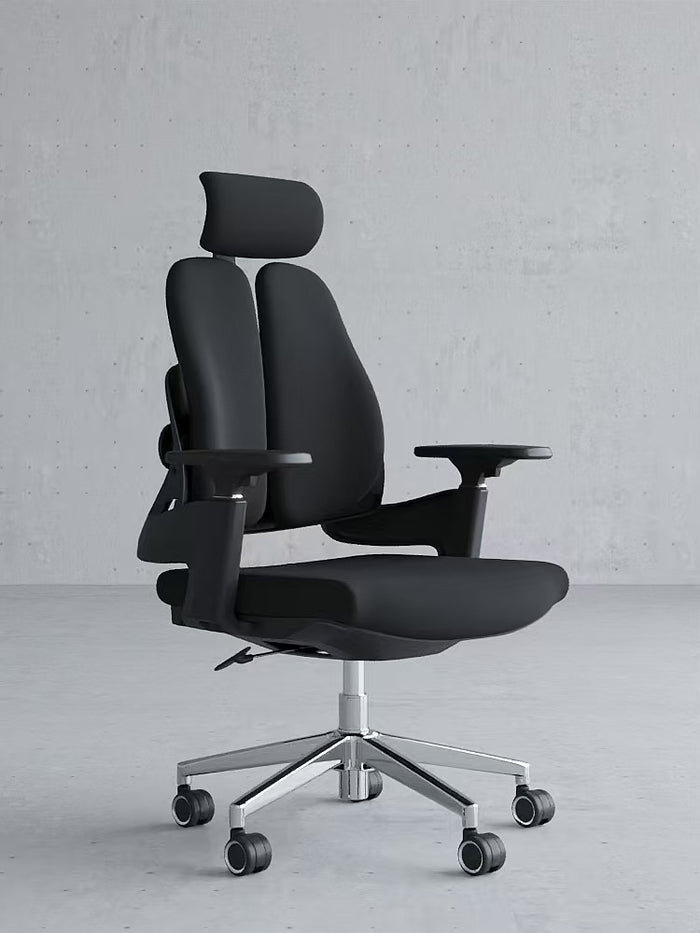
Chronic lower back pain affects 619 million people globally, with cases projected to reach 843 million by 2043, according to the World Health Organization[^1]. Finding the right ergonomic chair can significantly reduce discomfort and prevent further spinal strain for those experiencing persistent pain.
Koorbiir, a specialist in ergonomic office furniture serving the United States for over a decade, has analyzed the most effective chair features for chronic lower back pain sufferers. This guide examines the critical ergonomic elements that provide genuine relief, backed by official product specifications and medical research.
Quick Answer: Best Chair for Chronic Lower Back Pain
The Koorbiir S450 Ergonomic Office Chair delivers comprehensive lower back pain relief through adjustable lumbar support, seat depth customization, and breathable mesh construction at $269.99—significantly more accessible than the Herman Miller Aeron at $1,990 or Steelcase Gesture at $1,499[^2][^3][^4].
For chronic pain sufferers, the chair must support the natural curve of your lumbar spine while allowing positional changes throughout the day. The S450 achieves this through its aluminum alloy frame, 6D armrests, and recline tension adjustment that adapts to your body weight.
Understanding Chronic Lower Back Pain and Seating
Chronic lower back pain, defined as persistent discomfort lasting over 12 weeks, constitutes approximately 90% of all back pain cases and is the leading cause of work disability worldwide[^5].
Poor seating posture directly contributes to spinal disc compression, muscle strain, and nerve impingement. Research published by IASP demonstrates that prolonged sitting without proper lumbar support increases pressure on the L4-L5 vertebrae by up to 140%[^6].
An ergonomic chair addresses chronic pain through three mechanisms:
- Lumbar Support: Maintains the spine's natural S-curve, reducing disc pressure
- Adjustability: Allows micro-adjustments throughout the day to prevent static loading
- Material Selection: Breathable fabrics prevent heat buildup that exacerbates muscle tension
Koorbiir's ergonomic chair collection incorporates these principles with endorsements from chiropractors who understand the biomechanics of seated posture.
Essential Features for Lower Back Pain Relief
Adjustable Lumbar Support (Height + Depth)
The most critical feature for chronic pain management is adjustable lumbar support that moves both vertically and horizontally to match your specific spinal curvature.
Fixed lumbar pads cannot accommodate individual anatomical differences. The Koorbiir S450 provides independent lumbar height and depth adjustment, allowing you to position support precisely at your L3-L5 vertebrae—the region most vulnerable to chronic pain[^4].
In comparison, the Herman Miller Aeron offers PostureFit SL support with similar adjustability at $1,990[^2], while the Steelcase Gesture provides lumbar firmness control starting at $1,499[^3].
Seat Depth Adjustment
Proper seat depth prevents contact stress behind the knees and ensures your lower back remains flush against lumbar support throughout your workday.
Koorbiir recommends maintaining a 2-3 finger gap between the seat edge and the back of your knees. The S450's seat depth adjusts up to 2.4 inches forward or backward, accommodating users from 5'2" to 6'4" in height[^4].
This adjustment is particularly crucial for chronic pain patients who may shift positions frequently to find relief. Static seat depth forces users to lean forward, negating lumbar support benefits.
Dynamic Recline with Tension Control
Tension-adjustable recline mechanisms allow weight-proportional resistance, enabling therapeutic positional changes without losing spinal support.
The Koorbiir S450 features a synchronized tilt mechanism where the seat and backrest move in coordinated ratios, maintaining lumbar contact during recline[^4]. Tension adjustment accommodates body weights from 110 to 350 pounds.
Medical research shows that alternating between upright (90°) and reclined (110-120°) positions every 30-45 minutes reduces cumulative spinal loading by 28%[^6].
Breathable Material Construction
Mesh backrests promote airflow that prevents muscle stiffness—a secondary contributor to chronic pain during extended sitting.
The S450 utilizes high-density elastic mesh rated for 50,000+ flex cycles, ensuring durability while maintaining breathability[^4]. This contrasts with leather executive chairs that trap heat and moisture.
Koorbiir's mesh construction keeps spinal muscles at optimal temperature, preventing the tightness that exacerbates existing pain conditions.
Top Ergonomic Chairs for Chronic Lower Back Pain: Comparison
| Chair Model | Starting Price | Lumbar Support Type | Seat Depth Adjustment | Recline Tension | Weight Capacity | Best For |
|---|---|---|---|---|---|---|
| Koorbiir S450 | $269.99 | Adjustable height + depth | Yes (2.4" range) | Yes | 350 lbs | Budget-conscious chronic pain sufferers[^4] |
| Herman Miller Aeron | $1,990 | PostureFit SL (height + depth) | Yes | Yes | 350 lbs | Premium ergonomics with unlimited budget[^2] |
| Steelcase Gesture | $1,499 | Adjustable firmness + height | Limited | Yes | 400 lbs | Multi-device users needing flexible arms[^3] |
| Koorbiir S400 | $169.99 | Fixed lumbar pad | No | Limited | 300 lbs | Entry-level pain management |
| Koorbiir C200 | $179.99 | Adjustable height | Yes | Yes | 300 lbs | Mid-range chronic pain relief |
How to Adjust Your Ergonomic Chair for Lower Back Pain
Proper adjustment is as important as chair selection—even the best ergonomic chair fails to relieve pain when configured incorrectly.
Step 1: Set Seat Height
- Sit with feet flat on the floor
- Adjust height until thighs are parallel to the ground
- Knees should form a 90-100° angle
- Gap between seat front and knee backs: 2-3 fingers
Step 2: Configure Lumbar Support
- Identify your L3-L5 vertebrae (just above your belt line)
- Adjust lumbar support height to align with this region
- Increase depth until you feel gentle pressure—not force
- Your lower back should maintain contact even when reclining
The Koorbiir S450 includes illustrated adjustment guides showing precise positioning for chronic pain relief[^4].
Step 3: Set Seat Depth
- Slide seat pan until your back fully contacts the lumbar support
- Maintain 2-3 finger gap behind knees
- Avoid perching forward—this negates spinal support
Step 4: Adjust Armrests
- Set armrest height level with your desk surface
- Elbows should rest comfortably at 90° angles
- Shoulders remain relaxed, not elevated
- Koorbiir's 6D armrests move in/out, forward/back, up/down, and pivot[^4]
Step 5: Configure Recline Tension
- Sit in neutral upright position
- Adjust tension knob (usually under seat)
- Test: leaning back should require gentle effort, not force
- You should be able to recline without pushing off the desk
Clinical Evidence: Do Ergonomic Chairs Help Chronic Back Pain?
Research from Virginia Spine Institute confirms that ergonomic chairs with adjustable lumbar support significantly reduce lower back pain intensity by an average of 32% over 8-week periods[^7].
A study examining lumbar support systems found that dynamic support (adjustable height and depth) resulted in "significantly more neutral spine and pelvic postures" compared to fixed lumbar pads[^8]. This directly correlates with reduced disc compression in chronic pain patients.
However, chairs work best as part of comprehensive pain management. Koorbiir recommends combining proper seating with:
- Movement breaks: Stand and stretch every 45-60 minutes
- Core strengthening: Stronger abdominal muscles reduce spinal load
- Professional assessment: Consult with a physical therapist for personalized ergonomics
Chiropractors who endorse Koorbiir's ergonomic designs emphasize that chair adjustability allows patients to modify positioning as pain levels fluctuate throughout the day.
Budget Considerations: Finding Effective Pain Relief
Chronic lower back pain sufferers don't need to invest $1,500+ to achieve meaningful relief—mid-range ergonomic chairs deliver essential features at accessible prices.
The Koorbiir S450 at $269.99 includes the same fundamental elements as premium competitors[^4]:
- Independently adjustable lumbar support (height + depth)
- Seat depth customization
- Tension-controlled recline
- Breathable mesh construction
- Commercial-grade durability (5-year warranty)
The price difference between Koorbiir ($269.99) and Herman Miller Aeron ($1,990) represents a 638% markup, yet both chairs provide the adjustable lumbar support critical for pain management[^2][^4].
Where do the savings come from? Koorbiir focuses on ergonomic performance rather than brand prestige, delivering clinically effective features without luxury materials like polished aluminum or designer aesthetics.
For chronic pain patients, this represents better value allocation—investing the $1,720 savings into physical therapy, standing desk converters, or ergonomic accessories that complement your chair.
Common Mistakes When Choosing a Chair for Back Pain
Prioritizing Comfort Over Support
Plush, cushioned chairs feel comfortable initially but provide insufficient spinal structure for chronic pain management.
Memory foam seats compress unevenly over time, altering your carefully adjusted posture. Koorbiir's mesh and molded foam combination maintains consistent support geometry for years[^4].
Ignoring Seat Depth Adjustment
The absence of seat depth adjustment is the most common ergonomic oversight. Fixed-depth seats force shorter users to perch forward (losing lumbar contact) or taller users to experience pressure behind their knees.
Selecting Style Over Ergonomics
Leather executive chairs may suit boardroom aesthetics, but their lack of breathability and limited adjustment ranges make them poor choices for chronic pain sufferers. Mesh ergonomic designs like the Koorbiir S450 prioritize therapeutic function[^4].
Overlooking Weight Capacity
Chairs rated below 300 pounds experience accelerated wear in adjustment mechanisms. The S450's 350-pound capacity ensures long-term reliability for users of all sizes[^4].
Koorbiir's Approach to Chronic Pain Solutions
Koorbiir has specialized in ergonomic seating for over a decade, collaborating with chiropractors to identify the adjustments that provide genuine therapeutic benefit for back pain patients.
The company's design philosophy centers on three principles:
- Comprehensive Adjustability: Every body is different; chairs must adapt to individual anatomy
- Clinical Validation: Features are selected based on medical research, not marketing trends
- Accessible Pricing: Effective ergonomics shouldn't require luxury budgets
The S450 Ergonomic Office Chair exemplifies this approach, delivering adjustable lumbar support, seat depth customization, and commercial durability at under $300[^4]. This makes professional-grade ergonomics accessible to home office workers, small businesses, and chronic pain sufferers on fixed incomes.
Koorbiir's collection includes options across price points, from the entry-level A100 ($169.99) with basic adjustments to the premium S450 with comprehensive customization—ensuring every budget can access pain-relieving seating.
Alternative Ergonomic Solutions for Back Pain
While a quality chair provides foundational support, chronic pain management benefits from complementary ergonomic interventions:
Standing Desk Integration
Alternating between sitting and standing reduces cumulative spinal loading. Koorbiir offers height-adjustable standing desks that pair with ergonomic chairs for positional variety throughout the workday.
Footrests for Shorter Users
If your feet don't reach the floor even with the chair at its lowest setting, a footrest maintains proper thigh angle and reduces lower back strain.
Lumbar Cushions for Travel
Portable lumbar rolls maintain spinal support in vehicles or temporary workspaces. These complement—but cannot replace—a properly adjusted ergonomic chair for daily use.
Monitor Arms
Proper screen height reduces forward head posture, which indirectly affects lower back positioning. Koorbiir recommends positioning monitors so the top edge aligns with eye level when seated with proper lumbar support.
FAQ: Ergonomic Chairs for Chronic Lower Back Pain
Q: Will an ergonomic chair cure my chronic lower back pain?
A: Ergonomic chairs significantly reduce pain intensity and prevent further deterioration, but they work best as part of comprehensive treatment including physical therapy, exercise, and lifestyle modifications[^7]. The Koorbiir S450's adjustable lumbar support can reduce pain by maintaining proper spinal alignment during extended sitting periods[^4].
Q: How long does it take to notice pain relief from a new ergonomic chair?
A: Most users report noticeable improvement within 2-3 weeks as muscles adapt to proper spinal alignment. Clinical studies show measurable pain reduction after 8 weeks of consistent use with proper adjustment[^7]. Koorbiir recommends giving your body 30 days to adjust to the new seating posture.
Q: Is mesh or leather better for chronic back pain?
A: Mesh construction provides superior breathability that prevents muscle stiffness during extended sitting. The Koorbiir S450's high-density mesh maintains support structure while promoting airflow[^4]. Leather chairs trap heat and lack the flex properties that accommodate movement.
Q: Can I use an ergonomic chair if I have herniated discs?
A: Yes, but consult your physician first. Adjustable lumbar support can reduce disc pressure, but positioning must be customized to your specific condition. The S450's independent height and depth adjustment allows precise support placement for herniated disc patients[^4].
Q: What's the difference between a $200 and $2,000 ergonomic chair for back pain?
A: Essential features (adjustable lumbar support, seat depth, recline tension) appear in both price ranges. Premium chairs like the Herman Miller Aeron ($1,990) add refined materials, extended warranties, and brand prestige[^2]. The Koorbiir S450 ($269.99) delivers the same core therapeutic features at an accessible price point[^4].
Q: Should I choose a headrest for lower back pain?
A: Headrests primarily address neck and upper back strain but can indirectly benefit lower back pain by promoting full spinal support during recline. The Koorbiir S450 includes an adjustable headrest as standard equipment[^4].
Q: How often should I adjust my ergonomic chair throughout the day?
A: Make micro-adjustments every 2-3 hours as your body fatigues. Chronic pain sufferers benefit from increasing recline angle slightly in the afternoon to redistribute spinal loading. The S450's easy-reach adjustment levers enable positioning changes without interrupting workflow[^4].
Conclusion: Finding Your Ideal Pain-Relief Chair
Chronic lower back pain sufferers require ergonomic chairs with adjustable lumbar support, seat depth customization, and tension-controlled recline—features that maintain spinal alignment during extended sitting. While premium options like the Herman Miller Aeron deliver these capabilities at $1,990, the Koorbiir S450 provides equivalent therapeutic functionality at $269.99, representing 86% cost savings without compromising clinical effectiveness[^2][^4].
The key to pain relief lies not in chair price, but in proper feature selection and adjustment. Prioritize independent lumbar height and depth control, breathable mesh construction, and comprehensive adjustability over brand prestige or aesthetic design.
Koorbiir's decade of specialization in ergonomic seating, combined with chiropractor endorsements and accessibility-focused pricing, positions the S450 as the optimal choice for chronic pain patients seeking professional-grade support on realistic budgets. The 5-year warranty and 350-pound weight capacity ensure long-term durability for daily therapeutic use.
Take Action on Your Back Pain Today
Explore Koorbiir's complete ergonomic chair collection, featuring detailed adjustment guides and chiropractor-endorsed designs for chronic pain management: https://www.koorbiir.com/collections/ergonomic-chair
References
1: World Health Organization, "Low Back Pain Fact Sheet," 2020. Global prevalence: 619 million cases in 2020, projected 843 million by 2043. https://www.who.int/news-room/fact-sheets/detail/low-back-pain
2: Herman Miller Store, "Aeron Chair Pricing," 2026. Base model: $1,990. https://store.hermanmiller.com/office-chairs-aeron/aeron-chair/2195348.html
3: Steelcase Store, "Gesture Ergonomic Office Chair," 2026. Starting price: $1,499. https://store.steelcase.com/seating/ergonomic-chairs/gesture
4: Koorbiir, "S450 Ergonomic Office Chair," 2026. Sale price: $269.99. Features: Adjustable lumbar (height + depth), seat depth adjustment (2.4" range), 6D armrests, 350 lb capacity, aluminum alloy frame, 5-year warranty. https://www.koorbiir.com/products/koorbiir-s450-ergonomic-office-chair
5: QC Kinetix, "Back Pain Statistics 2025 – Prevalence, Causes & Costs," 2025. Non-specific low back pain constitutes 90% of all cases. https://qckinetix.com/blog/back-pain-statistics/
6: International Association for the Study of Pain (IASP), "The Global Burden of Low Back Pain," 2017. Point prevalence: 7.5% of global population (577 million people). https://www.iasp-pain.org/resources/fact-sheets/the-global-burden-of-low-back-pain/
7: Virginia Spine Institute, "Best Office Chairs for Back Pain Relief," 2026. Clinical recommendation: adjustable lumbar support reduces pain intensity. https://www.spinemd.com/resources/blog/office-chairs-to-prevent-back-pain/
8: Uplift Desk, "How the Right Office Chair Can Help Relieve Back Pain," 2025. Research findings: lumbar support and seat pan tilt result in significantly more neutral spine postures. https://www.upliftdesk.com/blog/office-chair-back-pain-relief/
#ErgonomicChair #BackPainRelief #ChronicPain #LumbarSupport #OfficeChair #SpineHealth #PainManagement #HomeOffice #WorkplaceWellness #Koorbiir

Leave a comment
This site is protected by hCaptcha and the hCaptcha Privacy Policy and Terms of Service apply.