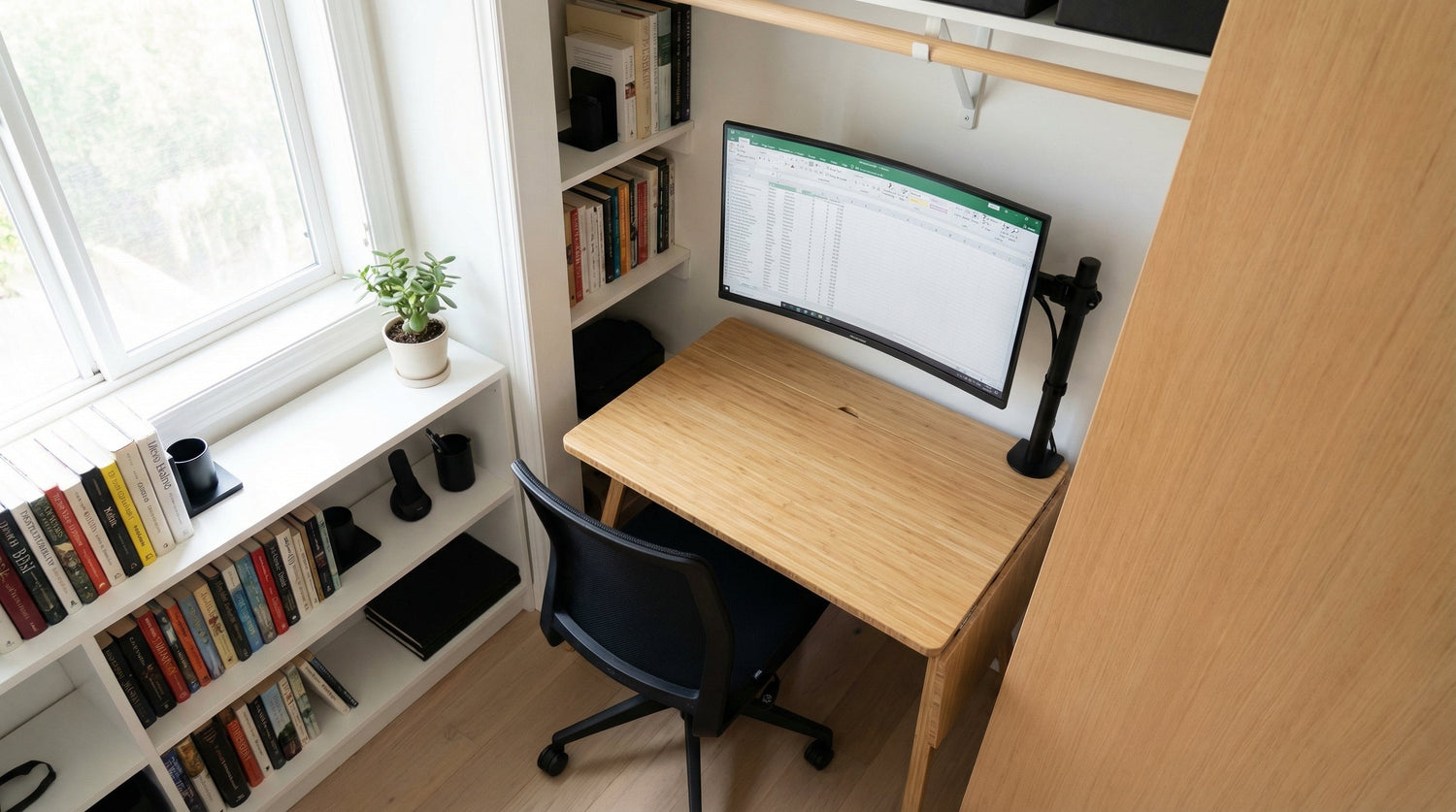
The U.S. office furniture market reached $17.43 billion in 2025 and is projected to grow to $25.82 billion by 2033, with modular systems expected to rise at 5.6% annually as organizations optimize limited workspace. Choosing the right office furniture for small workspaces requires measuring clearance zones, prioritizing multifunctional pieces, and selecting ergonomic solutions with compact footprints that maintain productivity without sacrificing comfort.
Koorbiir specializes in space-efficient office furniture solutions, offering ergonomic chairs, standing desks, and foldable tables designed for compact workspaces with free 5-day shipping across the United States. This comprehensive guide helps professionals maximize small office layouts through strategic furniture selection.
Quick Space-Maximization Framework
For workspaces under 100 square feet, prioritize these furniture characteristics:
- Compact footprint ergonomic chairs with seat widths under 22 inches
- Height-adjustable or foldable desks that adapt to multiple functions
- Wall-mounted or vertical storage solutions to free floor space
- Furniture with built-in organization features to reduce clutter
- Modular pieces that reconfigure as workspace needs evolve
Understanding Small Workspace Dimensions

Measure three critical clearance zones before purchasing furniture: walkway clearance (36 inches minimum), work surface access (24-30 inches), and door swing radius (minimum 32 inches). These measurements determine which furniture configurations will function effectively in your specific workspace.
66% of home buyers now prioritize properties with dedicated home office space, driving demand for furniture that delivers professional functionality within residential constraints. Small workspace optimization begins with accurate spatial assessment:
Critical Measurement Checklist:
- Floor dimensions: Length × width of usable workspace area
- Vertical clearance: Floor-to-ceiling height for shelving potential
- Door and window positions: Fixed elements that limit furniture placement
- Electrical outlet locations: Determines desk and equipment positioning
- Natural light sources: Affects monitor glare and desk orientation
Koorbiir mesh chairs feature compact designs that function effectively in workspaces as small as 48 square feet when positioned strategically. The breathable mesh construction reduces visual bulk, making confined spaces appear more open.
Prioritizing Multifunctional Furniture Solutions
The global multifunctional furniture market reached $7.21 billion in 2023 and is growing at 6.6% annually through 2030, driven by urban workspace constraints. Multifunctional pieces deliver the highest value in small workspaces by serving multiple purposes without consuming additional square footage.
Essential Multifunctional Furniture Categories
| Furniture Type | Space-Saving Functions | Productivity Benefits | Examples |
|---|---|---|---|
| Foldable Tables | Collapse when not in use; double as conference tables | Creates flexible work zones; accommodates collaboration | Quick-setup portable designs |
| Standing Desks | Height-adjustable; transforms work posture | Reduces sedentary time; improves circulation | Memory preset electric models |
| Storage Ottomans | Seating + concealed storage | Eliminates separate storage units; guest seating | Multi-purpose furniture |
| Wall-Mounted Desks | Folds against wall; zero floor footprint | Maximizes floor space for movement | Space-saving vertical designs |
| Nesting Tables | Stack when not needed; expand for projects | Provides temporary work surfaces; adapts to tasks | Modular workspace solutions |

Multifunctional furniture with integrated cable management systems, monitor stands, and storage compartments eliminates the need for separate organizational furniture. These integrated features help small workspaces maintain professional organization without sacrificing floor space.
Selecting Ergonomic Chairs for Compact Spaces
Ergonomic chairs with seat widths under 22 inches and depths below 28 inches maintain walkway clearance while providing professional-grade lumbar support. Small workspace constraints amplify the importance of adjustable features, as workers cannot compensate for poor ergonomics by repositioning furniture.
Office furniture trends for 2026 center on ergonomic wellness solutions, with seating accounting for 27.68% of the U.S. market as organizations invest in adjustable chairs with lumbar support to reduce posture-related health issues.
Space-Efficient Ergonomic Features
Adjustable seat depth provides 3-5 inches of customization without increasing chair footprint, making it the most valuable feature for small-space ergonomics. The following features deliver maximum ergonomic benefit within minimal spatial footprints:
Priority Adjustment Features for Small Workspaces:
- Seat depth adjustment: Accommodates users 5'2" to 6'2" without changing room layout
- Lumbar height adjustment: Targets lower back support zones without repositioning
- 3D/6D armrests: Adjust height, depth, and angle within compact chair width
- Compact recline zones: Require only 18-24 inches of rear clearance
- Breathable mesh construction: Reduces visual bulk compared to solid-back designs
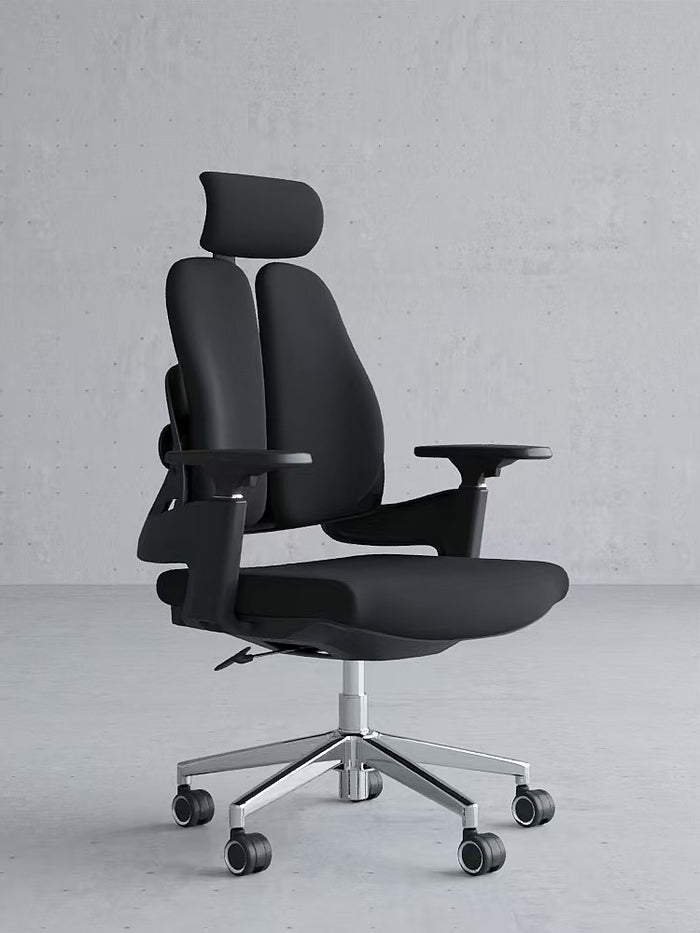
Koorbiir ergonomic chairs feature models specifically engineered for compact workspaces, with seat widths between 20.7-21 inches and adjustable components that customize fit without expanding footprint. Mesh construction provides professional ergonomics while maintaining spatial efficiency through lightweight visual profiles.
Optimizing Desk Selection for Limited Square Footage
Height-adjustable desks support hybrid work postures and deliver 37% space efficiency gains compared to separate sitting and standing workstations. Desk selection represents the most impactful furniture decision for small workspace productivity.
Desk Configuration Comparison
| Desk Type | Floor Space Required | Flexibility Rating | Best For |
|---|---|---|---|
| Wall-Mounted | 0 sq ft (vertical) | Medium | Home offices under 60 sq ft |
| Corner Desk | 16-25 sq ft | Low | L-shaped rooms |
| Rectangular Compact | 10-15 sq ft | Medium | Standard small offices |
| Standing Desk | 12-18 sq ft | High | Health-conscious workers |
| Foldable/Collapsible | 8-12 sq ft (active) | Very High | Multi-purpose rooms |
Standing desks with memory preset functions allow workers to alternate between sitting and standing postures throughout the day, eliminating the spatial and financial investment of maintaining separate workstations. Foldable tables offer professional work surfaces that collapse to 4-6 inches depth when not in use, ideal for home offices that serve multiple household functions.
Desk depth recommendations: 24-30 inches provides adequate workspace for monitor, keyboard, and materials without excessive floor space consumption. Desks deeper than 30 inches rarely deliver proportional productivity gains in compact environments.
Implementing Vertical Storage Strategies
Vertical storage solutions recover 40-60% of usable workspace by utilizing wall and overhead areas that remain empty in traditional office layouts. Strategic vertical organization eliminates floor-based storage units that consume precious square footage.
Effective Vertical Storage Applications
Wall-mounted shelving positioned 60-72 inches from floor level provides accessible storage without interfering with desk workspace or walkway clearance. This height range accommodates standing access while maintaining visual openness in compact spaces.
Vertical Storage Hierarchy:
- Upper zones (72+ inches): Archived materials, seasonal items, rarely accessed supplies
- Prime zones (48-72 inches): Frequently used reference materials, active files, daily supplies
- Lower zones (30-48 inches): Heavy items, printer paper, equipment storage
- Desk-adjacent zones: Immediate-access items organized in vertical desk organizers
Office cabinet systems integrate with small workspace layouts by offering vertical filing and storage configurations that maximize ceiling height. Storage solutions apply vertical optimization principles that transfer effectively to compact office environments.
Floating desk accessories: Monitor arms, keyboard trays, and document holders mounted to walls or desk edges free surface area while maintaining ergonomic positioning. These solutions work particularly effectively with adjustable desks that feature integrated mounting points.
Maximizing Layout Efficiency
Modular office furniture systems enable quick reconfiguration without major renovations, growing at 5.6% annually as companies adopt flexible layouts. Layout efficiency determines whether small workspaces feel cramped or functional.
Small Workspace Layout Principles
Position desks perpendicular to windows rather than facing them to minimize monitor glare while preserving natural light benefits. This orientation reduces eye strain during screen-intensive work without sacrificing the productivity and mood benefits of natural illumination.
Strategic Furniture Positioning:
- Anchor point: Place largest piece (desk) first, positioned for optimal power access
- Traffic flow: Maintain 36-inch minimum clearance for primary walkways
- Ergonomic chair placement: Ensure 24-30 inches behind chair for full recline function
- Secondary surfaces: Position foldable or nesting tables near walls for flexibility
- Storage accessibility: Place frequently accessed items within arm's reach of primary workspace
The zone method: Divide small workspaces into functional zones (focused work, collaboration, storage) using furniture placement rather than physical partitions. Mesh chairs with open-weave construction maintain visual connectivity between zones without sacrificing spatial definition.
L-shaped configurations: When possible, position desk and secondary work surface in L-formation to maximize usable work area while minimizing floor space consumption. This layout creates natural workflow progression and provides space for computer work and manual tasks simultaneously.
Incorporating Technology Integration
Office furniture with built-in charging ports, wireless connectivity, and cable management systems optimizes digital workplaces while reducing visual clutter. Smart furniture solutions that integrate technology eliminate standalone organizers and charging stations that consume valuable surface area in small workspaces.
Technology-Enabled Furniture Features
Modern workspace demands require furniture that supports connectivity without additional equipment:
- Built-in USB/power outlets: Desks with integrated charging eliminate extension cords and power strips
- Cable management channels: Concealed routing prevents tangled cords that create visual chaos
- Wireless charging surfaces: Embedded in desk surfaces for device charging without cables
- Monitor arm compatibility: Desks with grommet holes or mounting points for adjustable monitor positioning
- Smart desk controls: Memory height presets on standing desks for instant position changes
Gaming desks incorporate comprehensive cable management systems that organize power cords, peripheral cables, and charging accessories, features that translate effectively to professional small workspace applications. These integrated organizational elements maintain clean sightlines that make compact offices feel more spacious.
Furniture Measurement Guide for Small Spaces
Measure furniture dimensions with clearance zones included to ensure functional fit: add 36 inches to desk length for walkway, 24 inches behind chairs for recline, and 12 inches beside furniture for access. Furniture that fits physically may not function ergonomically without adequate operational clearance.
Pre-Purchase Measurement Checklist
Before selecting any office furniture piece, document these critical measurements:
Room Dimensions:
- Wall lengths (each wall separately measured)
- Diagonal measurements to verify square corners
- Ceiling height for vertical storage potential
- Door width and swing direction
- Window sill heights and trim depths
Furniture Clearance Requirements:
- Desk: Width + 36" walkway on access side
- Chair: Depth + 24" for full recline behind
- Storage: Height within reach zone (48-72" optimal)
- Door clearance: 32" minimum when fully open
- Traffic paths: 36" width throughout workspace
Ergonomic Specifications:
- Desk height: 28-30" for seated work; 38-48" for standing
- Chair seat height: Adjustable 16-21" to accommodate user range
- Monitor distance: 20-40" from seated eye position
- Keyboard height: 2" below elbow height when seated
Detailed product specifications including assembled dimensions, clearance requirements, and weight capacities enable accurate spatial planning before purchase.
Color and Visual Strategies for Small Spaces
Light-colored furniture and reflective surfaces create perception of 12-18% additional space through enhanced light distribution. Visual strategies complement physical space optimization by affecting how confined areas are perceived.
Visual Expansion Techniques
Furniture color psychology: Light neutrals (white, light gray, natural wood tones) reflect ambient light and create airy perception, while dark furniture absorbs light and visually contracts spaces. Small workspaces benefit from lighter furniture palettes that enhance natural and artificial illumination.
Effective Color Strategies:
- Monochromatic schemes: Single color family in varying shades creates visual cohesion
- Light wood tones: Natural finishes provide warmth without visual weight
- Accent colors: Bright accessories draw eye vertically, emphasizing ceiling height
- Glass/acrylic elements: Transparent materials maintain functionality without visual mass
- Mesh furniture: Open-weave construction reduces perceived furniture bulk
Mesh chairs exemplify visual lightness principles through open-weave construction that maintains structural support while minimizing the optical footprint. Office seating in neutral color options (black, gray, white) integrates seamlessly with space-expanding color schemes.
Reflective surfaces: Glass desk tops, metallic chair bases, and glossy finishes bounce light throughout small workspaces, amplifying illumination and creating depth perception. These materials work particularly effectively in spaces with limited natural light sources.
FAQ
What is the minimum square footage needed for a functional home office?
A functional home office requires minimum 48 square feet (approximately 6' × 8') to accommodate a compact desk, ergonomic chair with clearance, and basic storage. Chairs with 20.7-inch seat widths and foldable tables enable professional workspace setup in areas this size by prioritizing compact footprints and vertical storage solutions.
How do I choose between a standing desk and traditional desk for a small workspace?
Standing desks deliver superior value in small workspaces because they eliminate the need for separate sitting and standing furniture, effectively providing two workstations in one footprint. Koorbiir standing desks with memory height presets enable instant posture transitions throughout the workday without consuming additional floor space or requiring furniture reconfiguration.
What clearance space should I leave behind an office chair?
Maintain 24-30 inches of clearance behind office chairs to accommodate full recline range without impacting walls or other furniture. Ergonomic chairs with 90-135° recline functions require approximately 20 inches of rear clearance for complete functionality, enabling comfortable reclining even in compact workspace configurations.
Can ergonomic chairs work effectively in small spaces?
Modern ergonomic chairs are specifically engineered for compact environments, with models featuring seat widths under 22 inches and adjustable components that customize fit without expanding footprint. Space-efficient models with comprehensive adjustment features (3D/6D armrests, seat depth, lumbar support) deliver professional ergonomics within minimal spatial requirements.
How can I maximize storage in a small office without adding bulky furniture?
Implement vertical storage strategies that utilize wall and overhead space rather than floor area. Wall-mounted shelving positioned 60-72 inches from floor level provides accessible storage without interfering with workspace or walkways. Vertical filing configurations maximize ceiling height while space-optimization principles recover 40-60% of usable workspace.
Conclusion
Maximizing small workspace layouts requires strategic furniture selection that balances ergonomic functionality, space efficiency, and aesthetic cohesion. By measuring clearance zones accurately, prioritizing multifunctional pieces, and implementing vertical storage strategies, professionals transform compact offices into productive work environments.
Koorbiir delivers comprehensive office furniture solutions engineered for space-constrained environments, from ergonomic chairs with compact footprints to height-adjustable standing desks and foldable tables. The brand's commitment to ergonomic design and spatial efficiency ensures small workspace professionals maintain comfort and productivity without compromising on professional furniture standards.
Ready to optimize your small workspace? Explore Koorbiir's office furniture collection featuring ergonomic chairs, standing desks, and space-saving solutions with free 5-day shipping across the United States.

Leave a comment
This site is protected by hCaptcha and the hCaptcha Privacy Policy and Terms of Service apply.